
A Support Plan for Body and Emotions: Where to Start
A seven-step plan for medical safety, symptom tracking, nervous-system support, psychological care, and ongoing review.
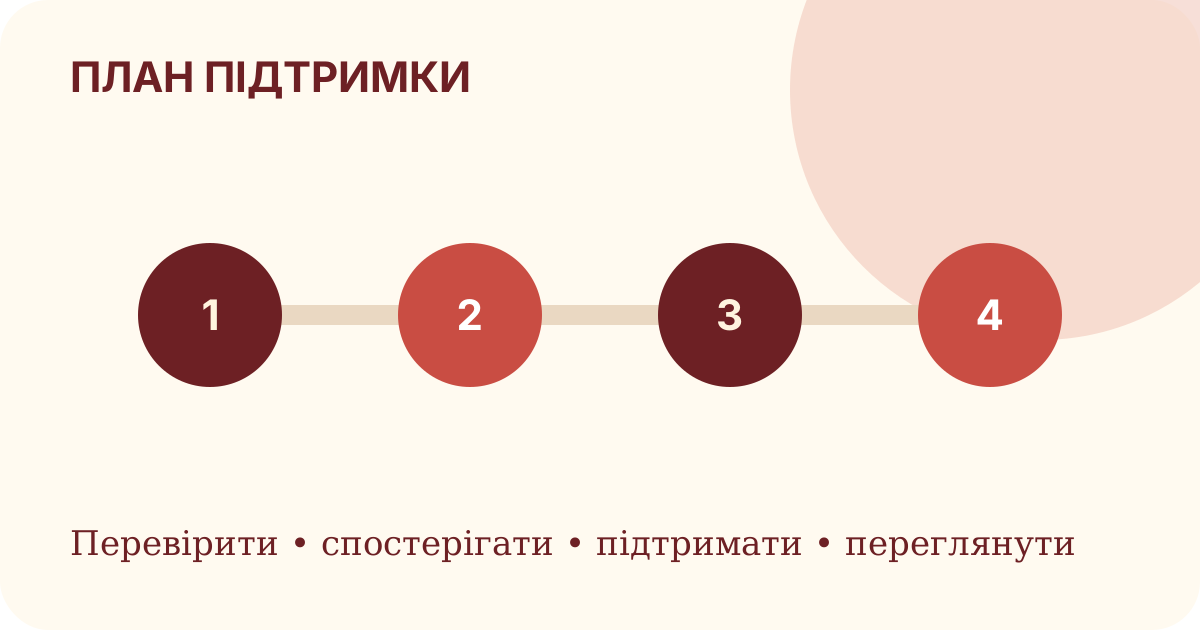
When a symptom is frightening or keeps returning, people often swing between endless testing and deciding too quickly that “it is only stress.” A safer path is structured: assess danger, work with a clinician, collect useful information, support basic physiology, and add psychological care when it fits.
Step 1: Screen for immediate danger
Call 911 for severe chest pain, major breathing difficulty, fainting, stroke signs, uncontrolled bleeding, severe allergic reaction, or another life-threatening emergency.
Step 2: Start with primary care
A primary care clinician can review the timeline, medications, risk factors, prior tests, and need for specialists. Bring a concise history.
Step 3: Track only what helps decisions
- Symptom quality, timing, duration, and average intensity.
- Sleep and fatigue.
- Meals, fluids, caffeine, alcohol, and relevant substances.
- Medication and treatment adherence.
- Activity, physical load, stressful events, and supportive contact.
- What helped, what worsened, and what is new.
Step 4: Rebuild basic conditions
- A reasonably stable wake time.
- Regular food and hydration when appropriate.
- Movement within clinical guidance.
- Breaks before exhaustion.
- Contact with safe people and practical support.
Step 5: Notice emotions without assigning blame
Emotions may indicate threat, loss, unfairness, overload, or disconnection. Name them as context rather than diagnosis.
Step 6: Add mental health care when useful
Therapy may help with panic, trauma responses, fear of movement, body checking, avoidance, depression, grief, shame, relationship stress, or loss of quality of life.
Step 7: Review the plan
If symptoms persist, worsen, or change, the plan should change too. You may need further medical evaluation, medication review, physical therapy, nutrition care, sleep treatment, psychiatry, or a different therapeutic approach.
Your next three steps
- Write one medical step.
- Write one body-support step.
- Write one emotional or social step.
- Choose the smallest version you can complete within 48 hours.
- Decide when you will reassess.
- Write the red flags that would change the plan immediately.
Key takeaways
- Safety and medical assessment come first.
- Tracking should improve decisions, not become constant surveillance.
- Therapy complements rather than replaces medical care.
- Plans need review when information changes.
Sources and references
Guide history
- Published
- July 31, 2026
- Updated
- July 31, 2026
Related guides

Psychosomatics: What It Really Means—and What It Does Not
A clear guide to the biopsychosocial model, real physical symptoms, medical evaluation, and the role of psychological support.
Read article
When You Should Not Blame a Symptom on Stress: Red Flags
Chest pain, fainting, severe shortness of breath, bleeding, sudden neurologic changes, and other signs that require urgent medical attention.
Read article
How Stress Affects the Body: Nervous System, Symptoms, and Recovery
Why stress can show up as muscle tension, headaches, stomach symptoms, palpitations, sleep disruption, and fatigue.
Read article